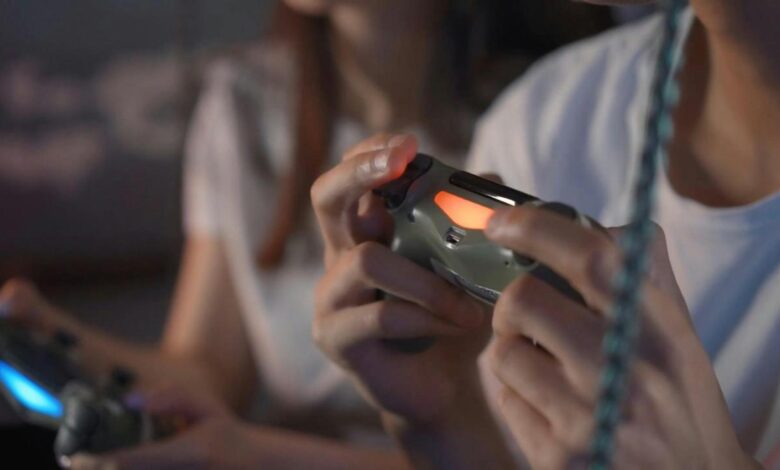
The Next Generation of Gaming Interaction is Physical
The world of interactive digital entertainment is constantly chasing one ultimate goal: total immersion. For decades, our connection to virtual worlds has been limited to what we can see and hear, channeled through screens, speakers, and the occasional rumble from a controller.
While visuals have leaped from pixels to photorealism, and audio from mono chirps to complex 3D soundscapes, the sense of touch—the most fundamental way we experience the real world—has remained largely untapped, creating a tangible disconnect between the player and the game universe.
This sensory gap means that even the most stunning virtual environments still feel like distant spectacles rather than places we inhabit.
Imagine the thunderous impact of a virtual explosion, the chilling drip of rain, or the recoil of a futuristic weapon—all of these experiences have been purely auditory and visual until now.
The current peripheral landscape, dominated by headsets and handheld devices, is reaching its natural limit in conveying deep, physical sensation.
To truly cross the threshold into the virtual realm, where digital actions have genuine, physical feedback, we must move beyond vibration and embrace a technology that wraps the player fully into the experience.
This long-awaited bridge between the digital and the physical is finally here, taking the form of haptic suits and advanced wearable technology, poised to redefine what it means to “play” a game.
I. Understanding Haptic Technology and Its Evolution

Haptic technology, or haptics, is essentially the science of creating a sense of touch through forces, vibrations, or motions. It’s the mechanism that brings the sense of feel into the digital realm.
A. The Simple Beginnings: Rumble and Vibration.
The journey began simply with the humble rumble pack in classic console controllers. This technology used small eccentric rotating mass (ERM) motors to create simple, non-directional vibrations. It was a groundbreaking addition at the time, offering a rudimentary sense of impact.
B. Advancing to High-Definition Haptics.
Modern controllers and mobile devices now use Linear Resonant Actuators (LRAs). These offer much finer, richer, and more localized feedback, often termed “HD haptics.” This allows a device to simulate the feeling of a click, a subtle texture, or a specific movement with much greater fidelity than a simple general vibration.
C. The Leap to Full-Body Feedback.
Haptic suits represent the pinnacle of this evolution, scaling the localized feedback of a controller to the entire body. Instead of just a single point of vibration, the suit uses dozens, or even hundreds, of discrete feedback points across the torso, arms, and legs. This allows for precise, spatially accurate sensations that track the virtual environment.
D. Two Core Mechanisms of Haptic Suits.
Most commercially available suits primarily utilize two types of feedback mechanisms to achieve their effects.
- Vibrotactile Feedback: This involves small motors or actuators that create specific patterns of vibration to simulate sensations like rain, wind, running, or light impacts. It’s excellent for conveying texture and subtle energy.
- Electro-Myo-Stimulation (EMS) or Electro-Tactile Stimulation: This more advanced technique delivers small electrical impulses to the muscles or skin, simulating the feeling of muscle tension, recoil, or even sharp pain (though safely and at low intensity). This technology is crucial for simulating force feedback, like the heavy kickback of a shotgun.
II. Technical Architecture: How Haptic Suits Connect Reality to the Virtual
The magic of a haptic suit lies in its complex, interconnected system that must operate with near-zero latency to maintain the illusion of immersion.
A. The Core Suit and Actuator Placement.
The suit itself is a vest or full-body covering embedded with a dense matrix of actuators. The placement is highly strategic, mirroring critical areas on the human body for sensation. The back might have a grid of 40-50 actuators, while each arm and leg contains fewer, focusing on major muscle groups.
B. Data Flow: The Critical Low-Latency Loop.
The entire system relies on an incredibly fast feedback loop:
- Game Engine Output: The game’s physics engine calculates an event (e.g., a bullet striking the player’s vest at coordinates X, Y).
- Suit Software Interpretation: Dedicated proprietary software receives this event and translates the virtual coordinates into physical commands for the specific actuator(s).
- Wireless Transmission: The command is sent wirelessly (usually via Bluetooth or Wi-Fi) to the suit’s central processing unit.
- Physical Activation: The suit’s internal CPU rapidly activates the designated actuators for the precise duration and intensity required. All of this must occur within milliseconds, otherwise the delay will break the user’s sense of presence.
C. Power Management and Wearability.
One of the greatest engineering challenges is balancing powerful haptic feedback with comfort and battery life. Suits must be lightweight, breathable, and capable of holding a charge for long gaming sessions without becoming restrictive or bulky. Designers are constantly striving to make the technology disappear for the user.
D. The Importance of Calibration and Customization.
Since everyone’s pain threshold and sensitivity differ, haptic suits require extensive calibration. Users must be able to fine-tune the intensity of various sensations (e.g., impact, vibration, and electro-stimulation) to personalize their experience and ensure safety.
III. Revolutionary Applications in Gaming and Beyond

Haptic suits are not just a peripheral accessory; they are a transformative technology that opens up entirely new genres and applications.
A. Enhancing First-Person Shooters (FPS).
The FPS genre is perhaps the most immediately impacted. Imagine not only seeing and hearing enemy fire but feeling the precise location of impact. This adds a critical layer of situational awareness that goes beyond simply looking at a heads-up display. The recoil from a heavy machine gun becomes a physical force, not just a screen shake.
B. Deepening Role-Playing Games (RPGs) and Adventure.
Haptics add a tactile richness to environmental interaction. Walking through a virtual forest, you could feel the subtle crunch of gravel underfoot or the biting cold of a snowstorm. When casting a magical spell, the build-up of energy could be felt as a growing pressure on the hands and chest.
C. The Metaverse and Social Interaction.
In the burgeoning Metaverse, haptics will enable digital social interaction to feel more real. A virtual high-five, a hug, or even a simple tap on the shoulder will carry a physical presence, making digital avatars feel less like abstract puppets and more like genuine companions.
D. Fitness, Training, and Rehabilitation.
The application of haptics extends far beyond entertainment.
- Elite Sports Training: Trainers can use the suit to deliver precise muscle stimuli, guiding an athlete through the correct form for a swing or a throw.
- Medical Rehabilitation: The suits can provide controlled, repetitive stimulation to help patients relearn movement patterns or regain sensation after injury.
- Virtual Skill Acquisition: Training simulations for complex, physical tasks—like operating heavy machinery or specialized surgical procedures—can be made dramatically more effective with realistic force feedback.
E. Accessibility and Sensory Substitution.
For gamers with hearing impairments, haptic suits can translate crucial audio cues, like footsteps or explosions, into physical vibrations. This form of sensory substitution democratizes the gaming experience, ensuring parity in crucial in-game information.
IV. Integrating Haptics with Next-Gen Gaming Trends
The true power of haptic suits emerges when they are combined with other major technological advancements reshaping the gaming landscape.
A. Synergy with Virtual Reality (VR) Headsets.
Haptics and VR are a match made in digital heaven. The visual and auditory immersion provided by a VR headset is completed by the sense of touch. A VR experience where you can physically feel the edge of a table, the texture of a wall, or the impact of a punch is infinitely more convincing.
B. Offloading with Edge Computing.
Creating detailed, multi-point haptic patterns in real-time requires immense processing power. Just like cloud gaming, the complex calculations for environmental textures, localized impacts, and sophisticated vibration patterns can be offloaded to Edge Computing servers. This prevents overheating the suit’s local processor and ensures minimal delay between a virtual event and its physical manifestation.
C. Leveraging AI for Dynamic Sensation.
Artificial Intelligence can be used to dynamically adjust haptic feedback based on the player’s physiology and emotional state. For example, if a player’s heart rate monitors show they are highly stressed, the AI could subtly increase the intensity of environmental haptics to heighten the tension, offering a truly personalized terror or excitement experience.
D. Full Interconnectivity with Smart Peripherals.
Haptic suits are part of a larger ecosystem of smart wearables. They seamlessly connect with haptic gloves (for hand and finger dexterity), haptic boots (for highly realistic walking and climbing feedback), and specialized motion platforms (for vehicle simulations). This creates a unified, full-sensory input/output system.
V. The Path Forward: Challenges and Future Outlook
Despite the breathtaking promise, the haptic suit industry faces significant challenges in achieving mass consumer adoption.
A. Cost and Accessibility.
Currently, high-fidelity haptic suits remain an expensive investment, often costing hundreds or even thousands of dollars. This limits their market primarily to enthusiasts and commercial applications. Reducing manufacturing costs is the primary key to achieving widespread adoption.
B. Software Support and Standardization.
The adoption is currently bottlenecked by the lack of native support from major game developers. A universal SDK (Software Development Kit) and standardized protocols are needed to make it easy for developers to “haptify” their games without extensive proprietary coding.
C. The Comfort and Safety Barrier.
Consumers remain wary of any technology involving electrical stimulation or cumbersome gear. Overcoming this requires relentless innovation in lightweight materials, thermal management (preventing the user from overheating), and iron-clad safety certifications to eliminate any fear of misuse or injury.
D. The Regulatory Landscape.
As haptic technology becomes more advanced, particularly with the use of electro-tactile feedback, regulatory bodies will likely establish standards for intensity, duration, and safety across different age groups and applications. The industry must preemptively work with these bodies to ensure safe development.
E. Future Form Factors: From Suit to Skin.
The future may not involve a cumbersome suit at all. Researchers are already developing ultra-thin, flexible electronic skin (e-skin) patches that can adhere directly to the body, providing sophisticated haptic feedback without any of the bulk. This would truly integrate the hardware invisibly into the gaming experience.
Conclusion
The integration of haptic suits marks a monumental milestone in the relentless pursuit of truly immersive gaming.
This technology successfully bridges the long-standing chasm between our physical senses and the digital realm.
Players are no longer passive observers but active participants who can feel the virtual world around them.
This physical connection enhances realism, deepens emotional engagement, and unlocks new dimensions of gameplay.
As costs decrease and software support expands, haptic suits will quickly become a standard peripheral for serious gamers.
The revolution is poised to affect everything from competitive esports to critical professional training simulations.
Ultimately, the ability to physically feel the game environment is the final piece of the immersion puzzle.