The AI-Driven Renaissance in Digital World Building
For the longest time, the worlds we explored in video games, from the sprawling fantasy landscapes to the intricately designed dystopian cities, were the painstakingly handcrafted creations of human developers.
Each tree, every stone, and all dialogue lines were meticulously placed by artists, writers, and programmers working thousands of hours, a process that, while resulting in incredible detail, inherently placed an upper limit on a game’s sheer scale and replayability.
This traditional approach means that once a player has explored every nook and cranny of the map, the game world essentially becomes a static museum, its secrets all revealed and its potential exhausted.
The promise of truly limitless virtual worlds, ones that constantly evolve, surprise, and adapt to the player, remained a science fiction dream, confined by the practical constraints of budget, time, and the finite capacity of development teams.
However, thanks to exponential advancements in Artificial Intelligence (AI) and, more specifically, Generative AI, we are now standing on the precipice of a radical transformation.
This technology is not just making non-player characters (NPCs) smarter; it is fundamentally altering the very act of creation, enabling game engines to birth entire, unique, and believable universes autonomously, guaranteeing that no two player experiences will ever be exactly alike.
I. The Shift from Handcrafted Design to Generative Systems

The foundation of modern game design is moving from a model of fixed content creation to a dynamic system of content generation, putting the tools of creation directly into the game’s hands.
A. The Limitations of Traditional Design.
The legacy method relied on pre-scripted events, fixed map layouts, and a finite library of assets. This approach, while capable of creating highly polished experiences, suffers from a predictable quality once the player learns the patterns.
B. Procedural Generation: The Forefather.
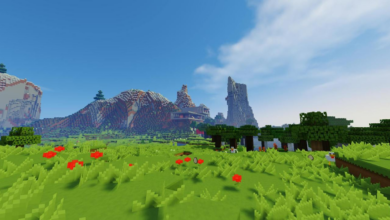
The initial step toward automated world-building was procedural generation. This technique uses algorithms and seed numbers to create random, yet structured, content like caves, planets, or dungeons. Games like Minecraft and No Man’s Sky were pioneers, using mathematical rules to assemble enormous maps from a set library of building blocks.
C. Generative AI: Beyond Randomness.
Generative AI takes procedural generation to an entirely new level. Instead of just following rigid mathematical rules, AI uses complex neural networks and machine learning (ML) models. It learns from massive datasets of real-world and human-made content, allowing it to generate objects, textures, narratives, and even music that are coherent, aesthetically pleasing, and functionally relevant, moving beyond mere random assembly to true creation.
D. The Three Pillars of AI-Driven World Generation.
Generative AI impacts the game world in three primary, synergistic ways.
- Asset Generation: Creating unique 3D models, textures, sound effects, and animations on the fly.
- Structural Generation: Designing believable and functional map layouts, from city blocks to planetary biomes.
- Narrative Generation: Developing complex dialogue, branching storylines, and dynamic lore that evolves with player actions.
II. How AI Builds the Physical World
The most immediate and visible application of Generative AI is its ability to construct the physical environments we play in with startling speed and realism.
A. Tackling Terrain and Biome Complexity.
AI can interpret topographical data and ecological rules to seamlessly blend biomes. It understands how a desert transitions into a grassland, or how a mountain range impacts local weather and flora distribution, creating geographical features that feel naturally formed.
B. Smart Architectural Generation.
Instead of randomly placing walls and doors, AI can generate structurally sound and architecturally plausible buildings. It considers factors like the function of the building (a tavern versus a blacksmith shop), the cultural style of the region, and the necessary spatial flow for gameplay.
C. Dynamic Detailing and Clutter.
AI excels at the mundane, yet essential, task of “cluttering” the world to make it feel lived-in. It strategically places objects—a half-eaten meal on a table, books scattered on a shelf, or tools left near a workbench—in ways that tell subtle environmental stories without human intervention.
D. Real-Time Texture Synthesis.
Modern games demand ultra-high-resolution textures. AI can dynamically synthesize infinite variations of a base texture (e.g., weathered stone or cracked earth) in real-time. This eliminates visible tiling, a common issue in large procedurally generated worlds, ensuring visual freshness everywhere the player looks.
E. Lighting and Atmosphere Adaptation.
AI models can calculate and render highly complex, realistic lighting and shadow effects that adapt to generated architectural forms. Furthermore, AI can dynamically alter the atmosphere—suddenly introducing a creeping fog or a vivid sunset—to enhance the emotional tone of a spontaneously generated scene.
III. AI and the Evolution of Inhabitants and Narrative

Perhaps the most exciting shift is how AI is breathing life into the inhabitants of the worlds it creates, making every encounter feel unique.
A. The Birth of Adaptive NPCs (Non-Player Characters).
Traditional NPCs follow simple “if-then” scripting. AI-driven NPCs, however, use deep learning models to possess memory, distinct personality profiles, and the ability to learn from past player interactions. An AI character might remember a player’s previous kindness or betrayal and adjust its behavior accordingly.
B. Generating Believable Dialogue and Voice Acting.
Using Large Language Models (LLMs), AI can create contextually relevant and lengthy dialogue on the fly, far exceeding the capacity of a human writer to produce. When coupled with advanced text-to-speech technology, this allows for the seamless, spoken creation of tens of thousands of unique character interactions.
C. Dynamic Quest and Storyline Generation.
The core narrative can become a fluid entity. AI can analyze a player’s preferred gameplay style (stealth, combat, diplomacy) and their choices to construct unique quests, unexpected plot twists, and new narrative arcs tailored specifically to that individual’s experience. No two players will ever embark on the exact same secondary quests.
D. Fostering Emergent Gameplay.
Emergent gameplay is the result of simple game systems interacting in complex, unanticipated ways. AI enhances this by introducing dynamic variables—like a sudden NPC revolt caused by an AI-managed economy crisis—that force the player to react to events entirely outside the main narrative path.
E. AI-Driven Factions and World Politics.
AI can manage complex internal politics within the game world. Factions will form alliances, declare wars, and suffer internal power struggles completely independently of the player, making the world feel like a true, living ecosystem with its own history unfolding in real time.
IV. The Synergy of AI and Modern Gaming Infrastructure
The immense computational load of generating content in real-time requires powerful, often distributed, computing resources.
A. Cloud Computing for Massive Training Data.
The initial process of training the generative AI models—feeding them terabytes of art, text, and environmental data—requires the massive scale and power of the centralized cloud. The foundational AI models are built in the cloud before being deployed to the game environment.
B. Edge Computing for Real-Time Generation.
Generating new dialogue, adjusting terrain details, or spawning new enemies in a distant area must happen instantaneously. Edge Computing—placing mini-servers close to the player—is essential for handling these latency-sensitive tasks. It ensures that the world can literally be built faster than the player can explore it.
C. Optimization for Next-Gen Hardware.
Modern CPUs and GPUs, with their specialized cores for AI processing (like NVIDIA’s Tensor Cores), are perfectly suited for running smaller, optimized generative models directly on the console or PC. This allows for personalized, low-latency generation of details like particle effects and subtle environmental changes.
D. The Modding Community Revolution.
AI tools will soon be accessible to amateur creators, allowing them to rapidly prototype and generate high-quality assets and levels. This democratization of content creation will empower the modding community, resulting in a parallel universe of player-generated content far surpassing current standards.
E. Testing and Quality Assurance (QA).
Paradoxically, AI that creates worlds is also essential for testing them. Specialized AI agents can navigate infinite, generated worlds, identifying bugs, testing game balance, and flagging structural flaws with a speed and consistency no human QA team could match.
V. Ethical and Creative Considerations
The shift to AI-generated worlds introduces complex questions that the industry must address responsibly.
A. The Uncanny Valley of Creation.
While AI can generate stunningly realistic content, there is a risk of falling into the “Uncanny Valley”—where the result is almost perfect, but subtly flawed in a way that feels deeply unsettling or unnatural to the player. Human oversight remains critical to refine AI output.
B. Intellectual Property (IP) and Ownership.
A critical question is who owns the copyright to content created entirely by an AI trained on existing art. Clear legal frameworks are needed to protect the intellectual property of developers and artists while still enabling the growth of generative tools.
C. The Human Touch in Storytelling.
While AI can generate plots, many argue that the true emotional resonance and thematic depth of the best narratives still require the intentionality and lived experience of a human writer. The future likely involves AI serving as a co-pilot, handling the bulk while humans provide the core creative direction.
D. Preventing Algorithmic Bias.
If AI is trained on biased datasets, it risks generating worlds, characters, and narratives that perpetuate real-world stereotypes or unfair representations. Developers must meticulously curate and audit their training data to ensure ethical and diverse world creation.
E. Maintaining Performance Consistency.
While a human-designed world is predictable and reliably stable, an AI-generated world can introduce unanticipated complexity that might crash the game engine. Strict computational limits and real-time performance monitoring must be implemented to manage the AI’s boundless creativity.
Conclusion
Generative AI is the most significant technological disruption the gaming industry has seen since 3D graphics.
This powerful technology fundamentally redefines the relationship between creators and the digital worlds they inhabit.
AI transforms the game world from a fixed stage into a truly organic, living, and infinitely evolving entity.
It dramatically lowers the barriers to creating vast, complex, and deeply personalized gaming experiences for everyone.
The role of human developers is shifting from that of laborers to that of architects, curating the AI’s immense creative output.
Players will soon demand the novelty of an AI-crafted world, making static, pre-made games feel outdated and limited.
This generative revolution ensures that the adventure never truly has to end, as the world constantly finds new ways to surprise you.