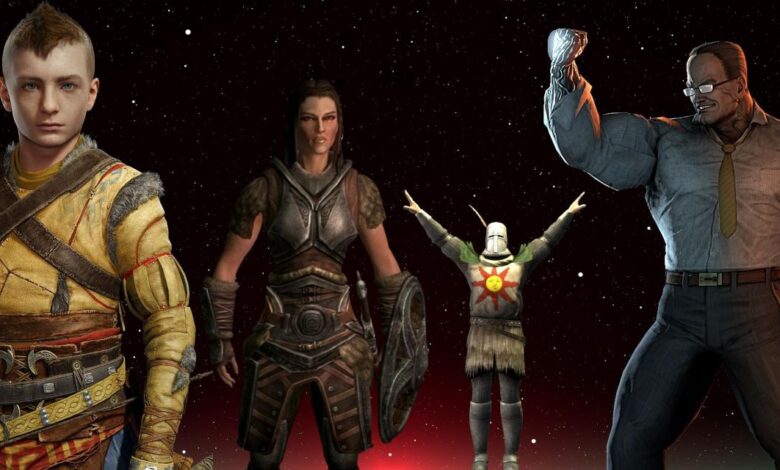
The Dawn of Truly Intelligent Virtual Inhabitants
The landscape of video games is undergoing a profound and accelerating metamorphosis, fundamentally reshaping the very core of interactive entertainment as we know it.
For decades, the experience of stepping into a digital world has been constrained by technical limitations, particularly in the behavior and believability of its computer-controlled characters.
These Non-Playable Characters (NPCs), while essential for storytelling and quest progression, have long been perceived as static automatons, following rigid scripts and repeating predictable dialogue loops.
This inherent predictability often served as a subtle, yet persistent, break in the immersion, reminding players that they were interacting with a programmed system rather than a living, breathing digital ecosystem.
The pursuit of deeper immersion, however, has driven a monumental shift, propelled by the exponential advancements in Artificial Intelligence (AI), moving beyond simple state machines to embrace complex, generative, and adaptive intelligence.
This technological leap is not merely about better graphics or faster processing; it’s about infusing virtual entities with a semblance of genuine cognitive function, transforming them from glorified signposts into convincing, persistent actors within the narrative stage.
The long-anticipated promise of truly reactive and emergent gameplay is finally materializing, marking a critical inflection point in the design and delivery of open-world and narrative-driven titles.
This paradigm shift, centered on believable AI, promises a dynamic digital future where every NPC interaction could hold an unexpected and meaningful consequence, thus elevating the player experience to unprecedented levels of sophistication and engagement.
Understanding the NPC Evolution

To truly grasp the significance of current AI integration, one must first appreciate the journey of the NPC. Historically, their behavior was governed by a hierarchy of fixed rules.
A. Finite State Machines (FSMs)
This was the foundation of early AI, where an NPC existed in discrete states (e.g., Idle, Patrol, Attack). Transitions between these states were triggered by simple, pre-defined conditions (e.g., “If Player enters radius, transition to Attack”). It provided basic functionality but was incredibly rigid and predictable.
B. Scripted Behavior Trees (BTs)
A more advanced structure that allowed for hierarchical planning. NPCs could attempt a series of actions (e.g., “Find Cover,” then “Reload,” then “Fire”), making their decision-making process more nuanced. However, the outcomes were still entirely pre-authored by the developer.
C. Goal-Oriented Action Planning (GOAP)
Pioneered in games like F.E.A.R., this system allowed an NPC to dynamically determine a sequence of actions required to achieve a specific high-level goal (e.g., “Need to heal”). The NPC would plan the steps itself, leading to emergent and often surprising tactical maneuvers within combat.
D. Generative AI and Large Language Models (LLMs)
This represents the current revolution. LLMs, combined with specialized game AI architectures, enable NPCs to generate unique, context-aware dialogue and actions in real-time. They can remember past interactions, form opinions about the player, and improvise responses to unforeseen circumstances.
The AI Engine Room: Technologies Driving Change
The shift from simple scripting to complex intelligence relies on several key technological pillars working in concert. These innovations are finally mature enough to be implemented at scale within modern game engines.
A. Contextual Awareness Frameworks
New AI frameworks allow NPCs to process vast amounts of in-game data in real-time. This includes environmental factors, reputation systems, time of day, player inventory, and the emotional state of other nearby characters. The AI uses this contextual data to ensure responses are appropriate and non-generic.
B. Generative Dialogue Systems
This is arguably the most visible change. Instead of pulling from a limited pool of recorded lines, LLMs are used to synthesize entirely new dialogue based on the NPC’s assigned personality, current mood, and memory of previous encounters. This eliminates repetition and makes every conversation feel unique and unscripted.
C. Emotional and Personality Modeling
Modern NPCs are assigned a detailed personality profile (e.g., Cynical, Heroic, Cowardly, Suspicious). AI then manages an internal “emotional meter” that tracks how the character feels about the player, the world, and current events. This internal state dictates everything from their vocal tone to their combat strategy.
D. Reinforcement Learning (RL) for Adversaries
In competitive games, AI opponents are trained using RL, a method where the AI learns the best strategy through trial and error, much like a human player. This leads to opponents who can dynamically adapt to the player’s unique fighting style, preventing repetitive “cheese” tactics from working repeatedly.
E. Procedural Mission Generation
AI can now analyze the game world and player statistics to generate dynamic, logical quests. Instead of the developer placing a quest marker, the AI might have a character approach the player because they remember the player has a specific skill or item needed for a spontaneously generated local crisis.
Impact on Gameplay and World Immersion
The integration of advanced AI radically transforms the core elements of the interactive experience, leading to game worlds that truly feel alive.
A. Emergent Storytelling
The combination of memory and generative dialogue creates a constant stream of emergent micro-narratives. An NPC who sees the player commit a crime might gossip about it later, leading to a diminished reputation in that town, an event the developers never explicitly scripted.
B. Elimination of Predictability
The age of “pathfinding error” and “repeating quest giver” is ending. Because NPC behavior is less scripted and more simulated, players must genuinely observe and adapt to their environment, as an enemy’s tactics or an ally’s reaction cannot be perfectly predicted on the second playthrough.
C. Believable Ecosystems
AI enhances the background simulation of the world. NPCs might now have genuine routines, jobs, and social interactions independent of the player. A market stall owner will react authentically to a sudden downpour, or a guard might genuinely take a break instead of standing motionless at their post for all eternity.
D. Personalized Player Experience
The game world effectively tailors itself to the individual. An NPC’s dialogue will reference the player’s specific history, character build, and moral choices. This deep personalization significantly boosts the feeling of being the central, impactful figure in that universe.
E. Enhanced Puzzle and Detective Mechanics
If NPCs can genuinely lie, cover up crimes, or protect secrets using generative dialogue, the process of information gathering and investigation becomes a complex puzzle in itself, requiring social finesse rather than simple button prompts.
Challenges and Ethical Considerations

The path to fully intelligent NPCs is not without its significant technical and ethical hurdles. These challenges require thoughtful design and careful implementation by game studios.
A. Computational Overhead
Running numerous LLMs and complex contextual frameworks in real-time for hundreds of NPCs is extremely demanding on the game engine and the player’s hardware. Optimization techniques, such as using local AI for small tasks and cloud processing for major dialogue, are necessary.
B. Maintaining Narrative Consistency
The AI must generate emergent content that does not fundamentally break the pre-authored main storyline or the established world lore. AI must operate within well-defined, strict guardrails to maintain the designer’s vision.
C. Controlling Toxic Behavior
Unfiltered generative AI can produce unexpected, offensive, or inappropriate content. Strict moderation and training are required to ensure the AI remains within the game’s rating and ethical boundaries, preventing the development of unintentionally toxic characters.
D. The Uncanny Valley of Behavior
As AI gets closer to human behavior, flaws become more glaring. A perfectly logical but emotionally cold NPC can be just as unsettling as a fully scripted one, demanding that developers prioritize emotional authenticity alongside intelligence.
E. Voice Synthesis Integration
Generative dialogue requires matching voice acting. Real-time, high-quality, synthetic voice generation that maintains the original actor’s tonal performance across infinitely variable scripts is a necessary and ongoing technological hurdle.
The Future Trajectory of Immersive Gaming
Looking ahead, the role of AI in gaming is set to expand far beyond just NPC behavior. It will become an invisible hand shaping every element of the experience, leading to a new era of interactive digital media.
A. Dynamic Game Master AI
Future games may be overseen by a high-level AI that acts as a personalized Game Master, dynamically adjusting difficulty, pacing, enemy placement, and story beats based on real-time player performance and psychological data.
B. AI-Generated Art and Assets
Generative AI is already being used to rapidly prototype concept art and 3D models. Soon, it will create complex textures, environmental details, and even entire side-quest locations on the fly, drastically reducing development time and cost.
C. Adaptive Accessibility
AI will be capable of identifying a player’s physical or cognitive needs in real-time and adjusting controls, text size, color contrast, and complexity levels accordingly, making games truly accessible to everyone.
D. Digital Companionship
NPCs may transition into full-fledged, persistent companions who can engage in open-ended conversations outside of the game’s structured narratives, offering true digital companionship rather than mere utility.
E. Player-AI Co-Creation
The ultimate step involves AI serving as a co-pilot for the player in creation modes, allowing players to describe a level or a custom quest, and having the AI instantly generate the necessary code, assets, and scripting.
The evolution from pre-programmed puppets to genuinely cognitive entities marks a phenomenal leap. This change is irreversible, cementing AI’s role not as a mere feature, but as the fundamental, underlying infrastructure of next-generation worlds.
Game developers are now wielding tools that allow them to simulate life, not just script it.
This opens the door to narratives where player actions truly matter, fostering a deep, psychological connection between the player and the virtual inhabitants of the world they explore.
The future of gaming is one of endless, unscripted possibility.
Conclusion
The video game industry now stands at the precipice of its most significant technological evolution in decades.
This transformation is driven by the mature integration of advanced Artificial Intelligence into the core design loop.
The days of rigid, predictable, and repetitive Non-Playable Characters are rapidly fading into obsolescence. New models utilize Large Language Models and Reinforcement Learning to create dynamic, context-aware, and emotionally resonant virtual beings.
These intelligent NPCs remember player actions, form genuine social opinions, and improvise unique dialogue, fundamentally redefining player interaction.
The result is a shift from linear, authored experiences to emergent, simulated worlds where every playthrough is profoundly personalized.
This AI revolution not only enhances player immersion by eliminating the “uncanny valley” of scripted behavior but also enables true, real-time procedural storytelling.
While challenges remain concerning computational demands and ethical consistency, the trajectory is clear: AI is becoming the invisible, powerful architect of all future digital universes.
This technological leap ensures that games will evolve from structured entertainment into complex, living, breathing, and infinitely reactive alternate realities. Ultimately, the AI-driven NPC is the key that unlocks the next generation of deep, personalized, and unforgettable interactive experiences for players everywhere.