The Unstoppable March Toward Visual Perfection
For decades, the pursuit of photorealism has represented the Holy Grail for game developers and graphical engineers alike, a tireless quest to dissolve the final visible boundaries between the interactive virtual world and the reality we inhabit.
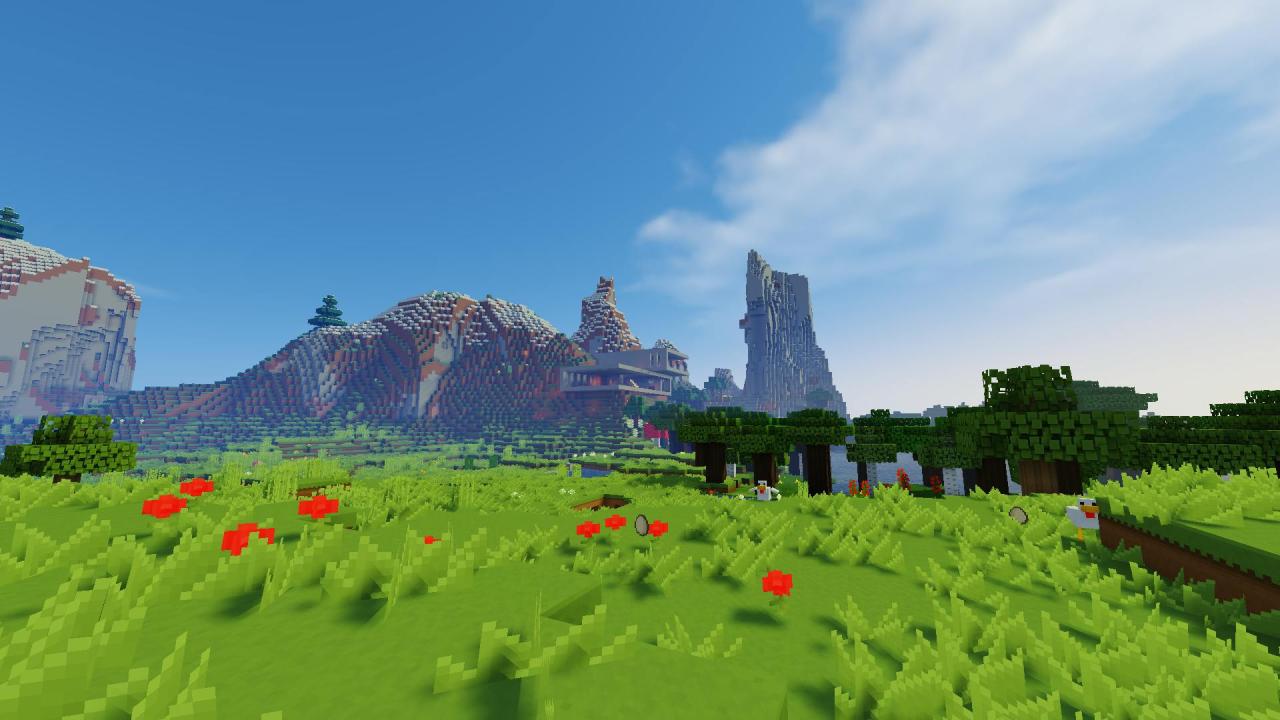
Early video games, with their blocky pixelated landscapes and two-dimensional characters, offered only the faintest suggestion of reality, requiring players to heavily engage their imaginations to fill in the massive visual gaps.
The transition to 3D models and rudimentary textures in the 1990s was revolutionary but still left worlds feeling abstract, sharp, and unmistakably digital, a necessary compromise dictated by the limited power of contemporary hardware.
Each successive console generation—from the shift to high-definition to the introduction of advanced shader models—has steadily eroded these limitations, making environments increasingly believable and characters astonishingly lifelike, yet a subtle artificiality always lingered.
However, the last few years have ushered in an unprecedented convergence of foundational technologies—including real-time ray tracing, advanced meshing, and the sheer parallel processing power of modern consoles and PC GPUs—that have finally tipped the scales.
We are now entering a breathtaking new era where the expectation for a visually stunning, indistinguishable-from-reality experience is no longer a graphical benchmark reserved for a few flagship titles but has rapidly solidified as the new fundamental baseline for any serious game production.
I. The Core Pillars Driving Photorealistic Fidelity

Achieving visual parity with the real world is not the result of one single technology, but the harmonious, simultaneous optimization of several critical graphics pipeline components.
A. Real-Time Ray Tracing (The Lighting Solution).
The most pivotal breakthrough is the adoption of real-time ray tracing, which fundamentally changes how light behaves in a digital environment. Instead of relying on approximations (rasterization) that calculate light paths poorly, ray tracing simulates the physical path of every light ray as it bounces, reflects, and refracts off surfaces. This delivers dramatically accurate global illumination, soft shadows, and physically correct reflections, eliminating the “video game look” that plagued previous generations.
B. Advanced Geometric Detail and Meshing.
High-end graphics demand geometric complexity far beyond previous capabilities. Modern engines utilize technologies like Nanite (Unreal Engine) or similar mesh-streaming systems that can render billions of polygons. This allows artists to import film-quality 3D assets directly into the game without requiring lengthy optimization or sacrificing detail, ensuring every object, from a cobblestone to a leaf, looks incredibly intricate.
C. Physically Based Rendering (PBR) and Material Fidelity.
PBR is an industry standard where materials (metal, wood, glass, skin) are defined by how they interact with light in the real world. This relies on scientifically accurate parameters like roughness, albedo (color), and metallicness. PBR ensures that an object looks realistically wet under rain or correctly dusty under harsh sunlight, regardless of where it is placed in the virtual world.
D. Performance Upscaling Technologies (The Efficiency Engine).
Rendering true photorealism at high frame rates (like 60 FPS or 120 FPS) requires immense power. Technologies such as NVIDIA’s DLSS (Deep Learning Super Sampling) and AMD’s FSR (FidelityFX Super Resolution) use AI and machine learning to render the image at a lower resolution and then intelligently upscale it to a high-resolution output. This provides a stunning visual quality that is nearly identical to native resolution but with significantly improved performance, making photorealism viable for a wider audience.
E. High-Fidelity Character and Facial Animation.
The “uncanny valley” effect—where near-perfect human characters look strangely unsettling—is being overcome by advanced motion capture and subsurface scattering for skin. New tools capture micro-expressions and subtle muscle movements with unprecedented accuracy, combining them with ray-traced lighting and PBR skin materials to create digital humans that are extremely difficult to distinguish from real actors.
II. The Interplay of Software and Hardware
The standardization of photorealism is a direct consequence of a powerful symbiotic relationship between state-of-the-art software pipelines and the vast, dedicated resources of next-generation hardware.
A. The Influence of Next-Gen Consoles.
The current console generation (e.g., PlayStation 5 and Xbox Series X/S) mandated the inclusion of hardware-accelerated ray tracing, establishing it as a base feature rather than a developer luxury. This commitment ensured that every game targeting these platforms had to at least consider utilizing these advanced lighting techniques.
B. Dedicated Ray Tracing Cores on GPUs.
Modern PC Graphics Processing Units (GPUs) include dedicated RT Cores (Ray Tracing Cores) that are specifically designed to handle the computationally intensive calculations of ray tracing in real-time. This specialized hardware offloads the work from the general-purpose shaders, allowing for high frame rates even with maximal visual settings enabled.
C. Solid-State Drives (SSDs) and Asset Streaming.
Photorealistic worlds are data-heavy, filled with gigabytes of high-resolution textures and complex meshes. The blazing-fast I/O (Input/Output) speed of custom SSDs in modern hardware is crucial. It allows the game engine to stream in massive amounts of visual data instantly as the player moves, eliminating pop-in, reducing load times, and making high-fidelity open-world games practically seamless.
D. Unified Memory and API Optimization.
Next-generation consoles feature highly integrated system architectures with unified memory. New low-level APIs like Microsoft’s DirectX 12 Ultimate and Vulkan give developers direct, efficient access to the GPU, minimizing driver overhead and maximizing the utilization of every core for graphical computation.
E. Physics Engines and Destruction.
Beyond just lighting and textures, photorealism is enhanced by realistic physical interactions. Advanced physics engines allow for complex simulations of soft bodies, fluid dynamics, and large-scale destruction, where debris and dust behave authentically under ray-traced lighting.
III. Shifting the Development Paradigm

When photorealism becomes the expectation, it dramatically changes the workflow, skillset, and resource allocation required for game development studios.
A. The Rise of Digital Artistry.
Game artists are now increasingly adopting workflows previously exclusive to film and visual effects (VFX). They use techniques like photogrammetry—scanning real-world objects to create perfect digital replicas—and rely heavily on the PBR model to define materials with scientific precision.
B. Engine Democratization.
Game engines like Unreal Engine and Unity have integrated cutting-edge tools directly into their platforms, making previously complex systems, like real-time ray tracing and advanced particle systems, accessible to smaller studios and individual developers. This ensures the photorealistic baseline can be met by more than just AAA titans.
C. The Asset Creation Pipeline.
The demand for high-fidelity content necessitates huge asset libraries. Studios now use generative AI tools to rapidly create variations of complex assets, textures, and details, saving hundreds of hours of manual labor while maintaining a high standard of visual authenticity.
D. Focus on Micro-Detail and Subtlety.
Developers are shifting focus from major visual overhauls to the minute details that sell the illusion of reality: the subtle ripple in a puddle, the volumetric smoke, the slight graininess on a camera lens, or the accurate rendering of humidity in the air. These micro-details are what separate near-photorealism from true visual fidelity.
E. Optimizing for Variable Performance Targets.
While the goal is visual perfection, developers must now master dynamic optimization. They utilize techniques like dynamic resolution scaling and frame-rate projection to ensure that the photorealistic quality scales gracefully across different hardware tiers, maintaining visual integrity even on lower-spec machines.
IV. Applications Beyond Traditional Gaming
The standardization of photorealistic rendering extends far beyond the entertainment sector, revolutionizing how various industries interact with virtual environments.
A. Virtual Reality (VR) and Training Simulations.
In VR, visual realism is essential to convince the brain that the environment is real, maximizing the training effect. Industries like aviation, military, and medicine use photorealistic simulations to train pilots, soldiers, and surgeons in environments that are indistinguishable from reality, dramatically improving skill retention.
B. Digital Twins and Industrial Planning.
Companies are creating photorealistic “digital twins”—exact virtual replicas of real-world factories, cities, or construction sites. This allows engineers and planners to test changes, optimize logistics, and predict outcomes in a high-fidelity, risk-free environment.
C. Filmmaking and Virtual Production.
Modern game engines are now used directly in film and television production. Directors can use photorealistic virtual sets, rendered in real-time on massive LED screens (Virtual Production), to film actors directly against dynamic backgrounds, eliminating the need for green screens and complex post-production.
D. Architectural Visualization (Archviz).
Architects and real estate developers use photorealistic game environments to allow clients to virtually walk through a building design before construction even begins. The ability to see accurate lighting, materials, and textures is invaluable for design feedback.
E. Metaverse and Digital Commerce.
As the concept of a persistent, interconnected metaverse grows, the quality of visual rendering is crucial. High-fidelity photorealistic environments will be necessary for consumers to feel comfortable engaging in digital commerce and social interaction within these virtual spaces.
V. The Future Trajectory and Remaining Challenges
Achieving the new baseline of photorealism is a massive achievement, but the pursuit of total, unquestionable visual perfection continues, facing its own set of hurdles.
A. The Computational Hunger.
Even with advanced upscaling, real-time ray tracing remains incredibly demanding. The ultimate challenge is to achieve full ray tracing (not just reflections and shadows) for every light interaction without compromising frame rates.
B. Data Acquisition and Storage.
The move to photorealism means exponentially larger game install sizes, straining local storage and bandwidth. New compression and streaming techniques are constantly needed to manage these massive asset libraries efficiently.
C. Dynamic Realism in Open Worlds.
Creating a static photorealistic scene is achievable; the next frontier is making that scene dynamically photorealistic—where every plant, every insect, and every piece of weather is realistically simulated and interacts with the player in real-time.
D. The Limits of Human Perception.
As visuals approach the limits of what the human eye can discern, the focus will shift to other elements, such as highly accurate haptics, seamless interaction, and auditory realism, to deepen the sense of presence beyond mere sight.
E. Ethical Use of AI-Generated Content.
The reliance on AI to rapidly generate photorealistic assets raises ethical questions regarding artistic originality and the provenance of the training data used by the algorithms.
Conclusion
Photorealistic graphics have fundamentally changed from a luxury feature into a non-negotiable expectation for modern interactive entertainment.
This new visual baseline is driven by the powerful synergy of dedicated hardware acceleration and innovative real-time rendering software.
The convergence of ray tracing, advanced mesh streaming, and PBR finally enables the creation of virtual worlds that are practically indistinguishable from the real world.
This visual revolution demands new skill sets from developers and has irrevocably altered the game development workflow.
The technology’s influence extends far beyond mere entertainment, transforming professional training, industrial planning, and filmmaking.
While challenges remain in optimization and data management, the commitment to visual perfection is now locked in across the industry.
The ultimate goal of total sensory immersion is rapidly approaching as the visual gap between reality and the virtual world effectively closes.