The Dawn of Ubiquitous, Instant Mobile Gaming
The world is witnessing a dramatic shift in how we consume entertainment, and mobile gaming is at the epicenter of this revolution.
No longer a mere distraction reserved for casual moments, mobile gaming has evolved into a global, multi-billion dollar industry that rivals its console and PC counterparts in both revenue and complexity.
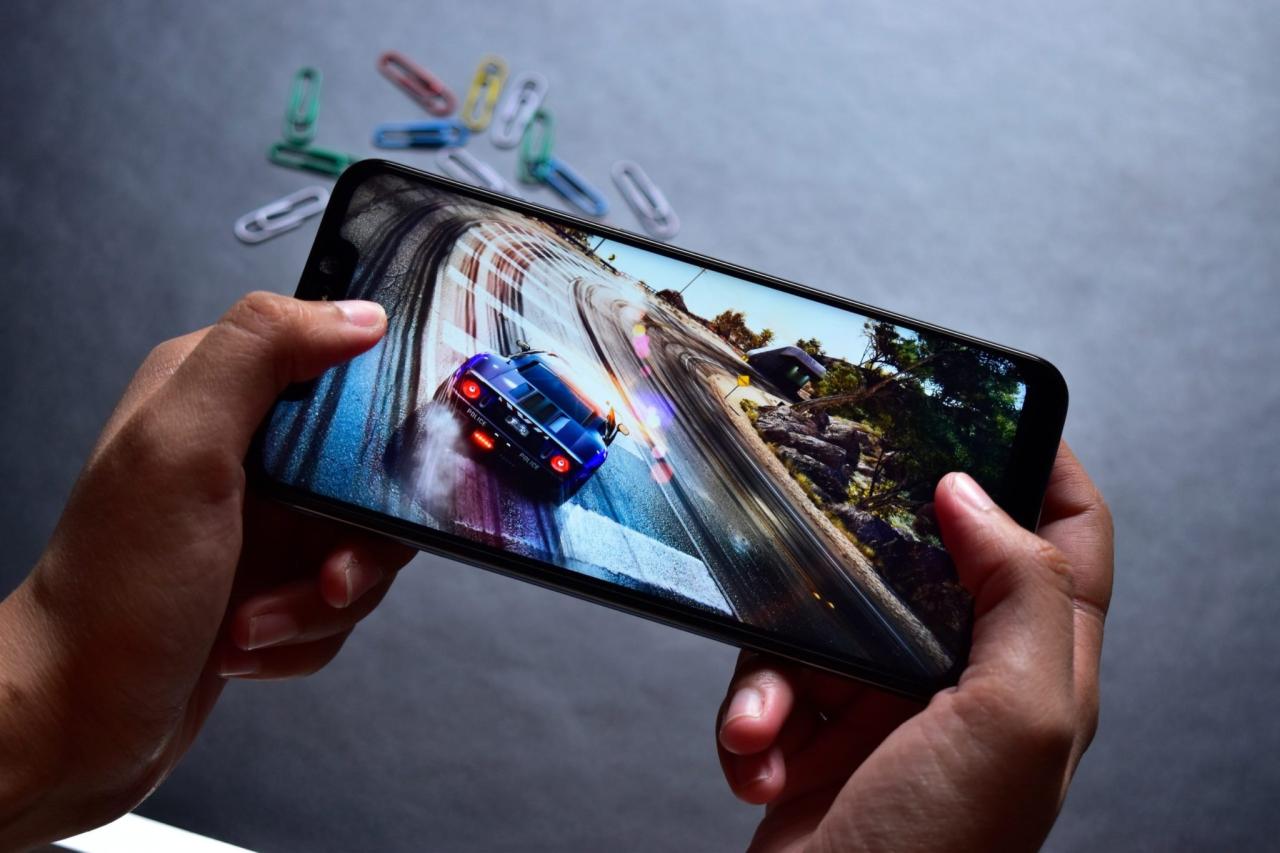
The modern mobile gamer expects a console-quality experience, complete with stunning high-definition graphics, complex physics engines, and deeply interactive multiplayer environments, all streamed seamlessly to a device that fits in their pocket.
This soaring demand places unprecedented stress on the fundamental infrastructure of the internet. Traditional cloud computing, while powerful, inherently struggles with the tyranny of distance. Data must travel from your smartphone to a centralized server, perhaps hundreds or even thousands of miles away, and then back again.
This round trip, even if just a fraction of a second, creates a noticeable delay known as latency, a phenomenon that can instantly ruin the experience of a fast-paced action game or a competitive esports match.
To meet the hunger for instant, flawless performance, especially in graphically intensive and real-time multiplayer titles, a radical architectural change is necessary.
The current network paradigm is simply unsustainable for the future of truly immersive, high-fidelity mobile experiences.
This is where Edge Computing steps in, promising to be the fundamental technological pivot that not only sustains the current growth trajectory but turbocharges mobile gaming into its next golden era by bringing the processing power closer to the player than ever before.
It’s the essential missing piece of the puzzle, a decentralized solution to a centrally burdened problem.
I. Understanding the Mobile Gaming Bottleneck: Latency
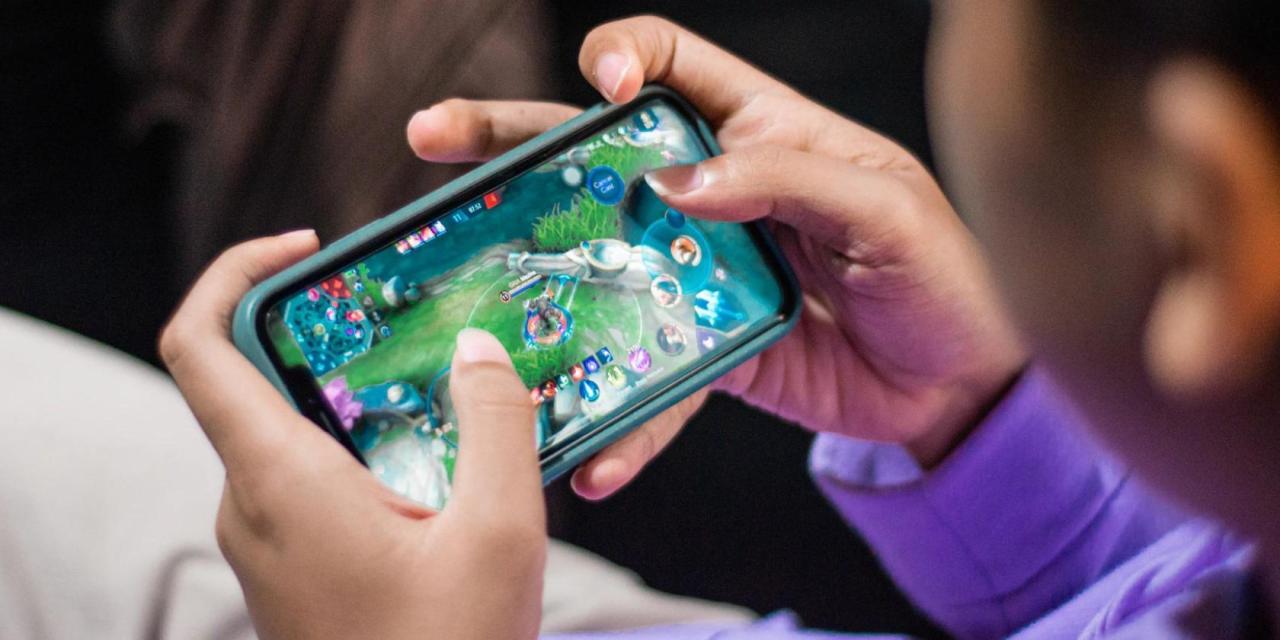
Latency is the invisible killer of modern gaming experiences. It is measured in milliseconds and represents the time delay between a player’s action (like pressing a button) and the game server’s response being displayed on their screen.
A. The Centralized Cloud Challenge.
The conventional cloud model relies on massive, geographically centralized data centers. These centers are incredibly powerful, but their distance from the end-user is a critical limitation for applications requiring instantaneous response. For a casual app, this delay is negligible. For a competitive mobile shooter, it is fatal.
B. The Impact on User Experience.
High latency manifests as “lag,” causing stuttering, delayed hit registration, and frustrating disconnections. This directly translates to poor player retention and negative reviews. The expectation for zero-lag performance is now non-negotiable for any successful mobile game.
C. The Rise of Real-Time Interaction.
The move towards massive multiplayer online (MMO) mobile games, cloud gaming services (like Xbox Cloud Gaming or GeForce NOW on mobile), and real-time social features demands a sub-20 millisecond latency. The only way to consistently achieve this is to significantly shorten the physical distance the data must travel.
II. Edge Computing: A Decentralized Solution
Edge Computing is an advanced network paradigm that involves processing data near the source of the data generation, rather than sending it to a distant cloud data center. It’s about decentralizing the computing infrastructure.
A. Definition of the Edge.
The “Edge” is defined as any computing infrastructure placed at or near the access network, such as cell towers, local data hubs, or even within regional telecommunications offices. These localized facilities are much closer to the end-user’s device.
B. How Edge Reduces Latency.
By locating servers mere miles, or even feet, from the mobile user, the data’s physical travel time is drastically cut. For instance, a game-critical command might travel only through a local 5G antenna and a nearby Edge server, avoiding the long-haul fiber optic journey to the traditional cloud.
C. Distributing Computational Load.
The Edge does not replace the traditional cloud; it complements it. The Edge handles tasks that are time-sensitive and geographically dependent, such as real-time game state synchronization or physics calculations. The core cloud retains less-urgent, large-scale tasks like long-term data storage and development pipelines.
III. The Five Critical Areas Edge Computing is Revolutionizing Mobile Gaming
Edge Computing acts as a multiplier for several cutting-edge gaming technologies, pushing the boundaries of what a mobile device can handle.
A. Cloud Gaming Performance.
The promise of cloud gaming is to play AAA titles on any mobile device without powerful local hardware. Edge Computing makes this promise a reality by eliminating the debilitating latency that has plagued early cloud gaming attempts. The Edge allows for instantaneous streaming of video and real-time processing of player input, making the experience feel as if the game is running locally.
B. Augmented Reality (AR) and Mixed Reality (MR).
AR mobile games, like the future evolution of Pokémon GO, require immense, real-time spatial mapping and object recognition. The mobile device cannot handle this heavy processing alone. Edge servers can rapidly compute complex algorithms and send the processed data (e.g., the location of a virtual character or the rendering of a complex AR environment) back to the device almost instantly. This enables truly persistent and shared AR experiences.
C. AI-Powered Non-Player Characters (NPCs).
Modern AI for game characters is complex and computationally expensive. By offloading the AI brain of hundreds of NPCs to the Edge server, game developers can create vastly more intelligent, realistic, and adaptive game worlds. The Edge handles the machine learning models that govern NPC behavior, allowing the mobile device to focus solely on rendering the result.
D. Massive Multiplayer Environments (MMO and Battle Royale).
Edge Computing is vital for maintaining the stability of Battle Royale and large-scale MMOs. It allows for ultra-fast synchronization of hundreds of players’ actions in the same virtual space. The Edge can manage the collision detection and state changes for the entire zone, ensuring fairness and preventing the “peeker’s advantage” caused by lag.
E. High-Fidelity Graphics and Dynamic Content.
Edge servers can be used for sophisticated, dynamic content rendering. Techniques like dynamic resolution scaling and real-time texture streaming can be managed by the Edge based on the player’s network conditions and location, guaranteeing the highest possible visual quality without overheating the mobile device or draining its battery too quickly.
IV. The Role of 5G and Future Networking Infrastructure
Edge Computing is inextricably linked to the rollout and advancement of 5G and subsequent network generations.
A. 5G’s Necessary Foundation.
The 5G network provides the high bandwidth and low-latency wireless connection necessary to link the mobile device to the nearby Edge server efficiently. Without 5G’s underlying speed, the benefit of having the server close is largely negated. The combination of 5G radio access and Edge Processing is a powerful synergy.
B. Network Slicing for Gaming.
Network slicing, a key feature of 5G, allows telecom providers to dedicate a portion of their network exclusively to high-priority traffic like mobile gaming. This “slice” is optimized for low latency, essentially giving games a dedicated, high-speed lane to the Edge server.
C. The Evolution to Edge Hardware.
The deployment of Edge infrastructure requires new specialized hardware and software. Companies are installing small-scale data centers directly into cellular towers or at the base of fiber nodes. These mini-data centers are optimized for power efficiency and rapid deployment, forming a global mesh of localized compute power.
V. Challenges and the Road Ahead for Edge-Powered Mobile Gaming
While the future looks bright, several significant hurdles must be overcome to realize the full potential of Edge Computing in mobile gaming.
A. Standardization and Interoperability.
The lack of uniform standards across different telecom providers and hardware manufacturers complicates deployment. Game developers need a consistent, unified API (Application Programming Interface) to access various Edge networks without having to rewrite their code for every region or carrier.
B. Security and Data Privacy.
Distributing data processing across numerous smaller Edge nodes increases the network’s surface area for potential cyber threats. Robust security protocols are essential to protect player data and prevent cheating, which can be easier to achieve in a decentralized environment.
C. Commercial Viability and Pricing Models.
The enormous investment required to build out a global Edge network means that usage will be expensive. Clear and sustainable pricing models are needed for both game developers and players, potentially involving new subscription or pay-per-use structures for ultra-low latency access.
D. The Power Consumption Issue.
Running numerous micro-data centers closer to residential areas raises questions about overall power consumption and the environmental impact. The industry must focus on developing energy-efficient Edge hardware and smart workload distribution algorithms.
E. Seamless Handover Across Edges.
As a player moves geographically (e.g., from one city to another, or even just from one cell tower to the next), their game session must be seamlessly “handed over” from one Edge server to the next. This real-time migration without any interruption to the gameplay session is a critical technical challenge.
Conclusion
Edge Computing is not merely an improvement to mobile gaming; it represents a fundamental paradigm shift. The convergence of 5G speed and localized processing capability completely removes the long-standing technical barrier of latency.
This unleashes a torrent of creative possibility for game developers who are no longer restricted by the limited computational power of the mobile device itself. Players can expect an unprecedented level of graphical fidelity, complex world simulation, and stable, instantaneous multiplayer action directly on their smartphones and tablets.
The mobile device transforms from a local processor into a high-end terminal for a distributed, global supercomputer.
This powerful new infrastructure guarantees that the mobile platform will lead the charge in immersive experiences, driving competition and innovation across the entire gaming ecosystem.
This technological evolution will irrevocably alter player expectation and the economic model of game development for the next decade.