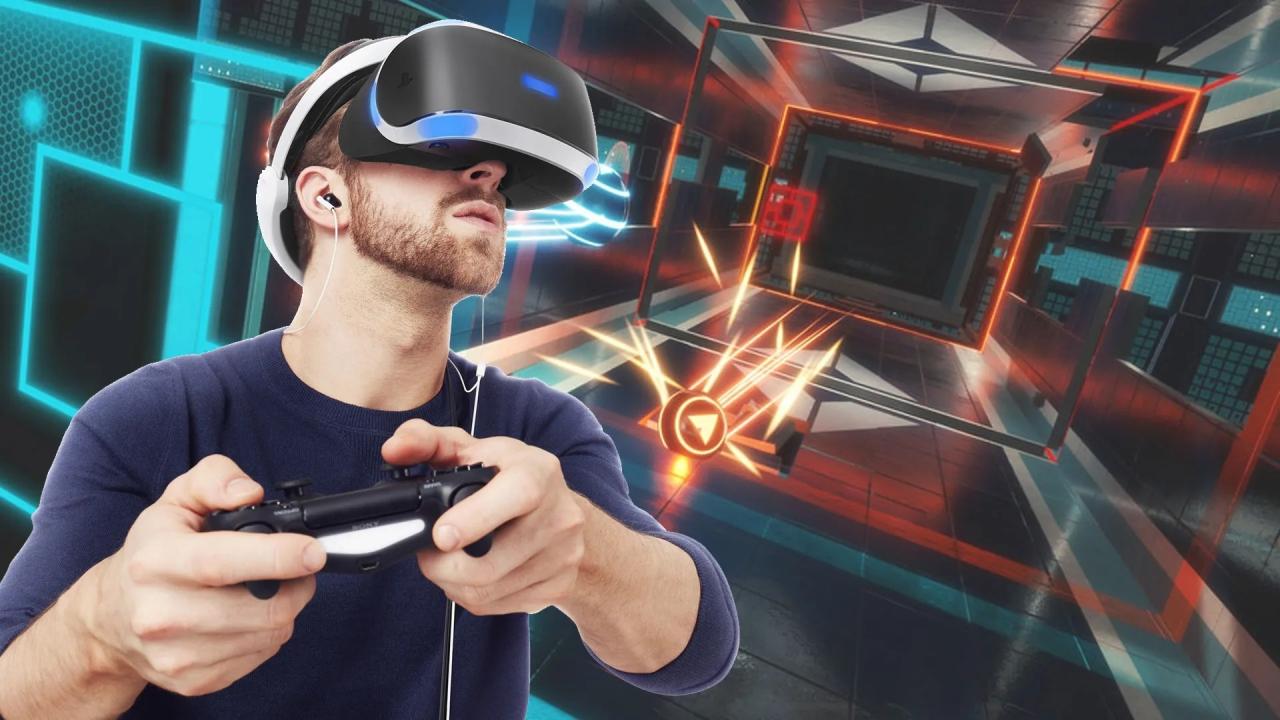
Stepping Into the Digital World: The New Reality
For decades, video games have relied on the flat, rectangular screen as the window into digital worlds, a necessary but ultimately limiting barrier between the player and the rich, expansive universes crafted by developers.
This conventional interface, whether on a monitor, television, or mobile device, always maintained a critical distance, reminding the player that they were merely observing and controlling characters within a simulation.
The promise of true, unmediated immersion—the feeling of genuinely being present within the game environment—remained the industry’s ultimate, yet elusive, holy grail.
Today, however, that distant aspiration is rapidly transitioning into a tangible reality, catalyzed by the rapid and simultaneous maturation of Virtual Reality (VR) and Augmented Reality (AR) technologies.
These dual technological forces are fundamentally dissolving the physical barriers of traditional gaming, moving the interaction model from passive observation to active, intuitive participation.
VR plunges the user completely into an all-encompassing, believable alternate reality, engaging the senses of sight, sound, and increasingly, touch, while AR masterfully overlays interactive digital elements onto the user’s immediate physical surroundings, seamlessly blurring the lines between the digital and the real.
This convergence and refinement of these immersive technologies are not just offering better graphics or more responsive controls; they are launching an entirely new era of interactivity, creating deeply personal, spatially aware, and emotionally resonant experiences that are poised to redefine what the act of “playing a game” truly means in the modern technological age.
Defining the Immersive Leap: VR vs. AR
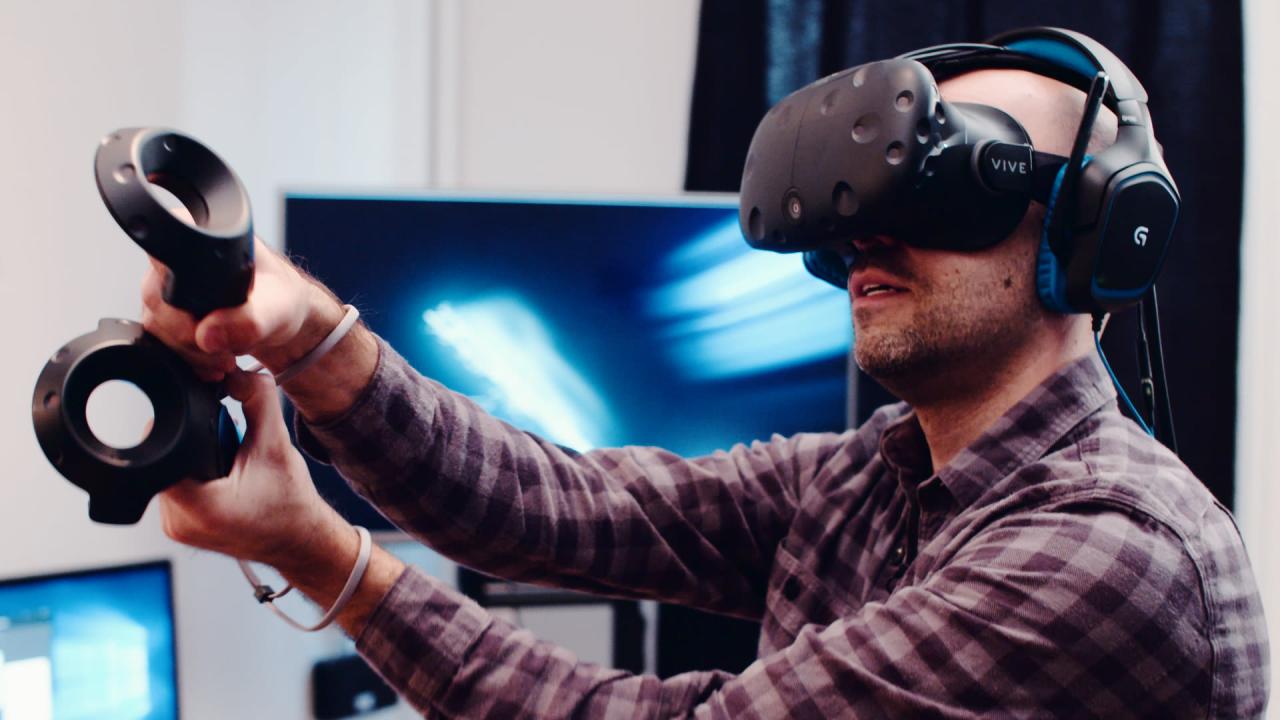
While often grouped together, VR and AR offer distinct paths to immersive gaming, each with unique technological requirements and applications that are seeing significant breakthroughs.
A. Virtual Reality (VR)
VR achieves total immersion by completely replacing the user’s real-world view with a simulated, three-dimensional digital environment. The technological breakthrough here lies in achieving low latency and high resolution to eliminate motion sickness and create true visual fidelity.
B. Augmented Reality (AR)
AR maintains the user’s connection to the real world while overlaying digital information, characters, or interactive objects onto their actual environment. The innovation for AR gaming centers on accurate spatial mapping and seamless object persistence in the real world.
C. Mixed Reality (MR) and Extended Reality (XR)
This is the emerging middle ground, often facilitated by headsets like the Apple Vision Pro or high-end Meta Quest devices, which use external cameras to blend the digital and physical. Games in MR can interact with real furniture, making the play space part of the virtual environment.
D. The Power of Presence
The key metric for all these technologies is “Presence,” the psychological state where the user’s brain perceives the simulated environment as real. Recent breakthroughs in field-of-view (FOV) and eye-trackingare crucial for enhancing this sensation of true presence.
E. Input Revolution
Traditional controllers are being replaced by intuitive input methods like hand tracking, gesture recognition, and body tracking, which make interactions within the game feel natural and physical, mimicking real-world actions.
Breakthroughs in VR Headset Technology (2025 Focus)
The hardware foundation of VR has overcome major hurdles, moving from bulky, expensive, and complex setups to streamlined, powerful, and accessible devices.
A. Crystal Clear Visuals
Next-generation VR displays feature dramatically increased PPD (Pixels Per Degree), leading to a visual quality so sharp that the “screen door effect” (seeing the gaps between pixels) is virtually eliminated. This realism is essential for deep immersion.
B. Self-Contained Power
The move toward standalone headsets (devices that don’t require a powerful PC or console connection) has vastly improved accessibility. Breakthroughs in mobile chip performance allow these devices to run graphically complex games locally.
C. Advanced Inside-Out Tracking
Headsets now accurately track the user’s position and orientation in a large physical space without relying on external sensors. Simultaneous Localization and Mapping (SLAM) algorithms provide room-scale freedom with millimeter-level precision.
D. Ergonomics and Weight Reduction
Continuous engineering efforts are focused on making headsets lighter and better balanced, minimizing strain on the neck and face during long gaming sessions, a critical factor for mainstream adoption.
E. Vari-focal Optics
Emerging optical technology, such as vari-focal lenses or focal-plane shifting, allows the headset to change its focus distance, mimicking how the human eye naturally adjusts when looking at near or far objects, which significantly reduces eye strain and visual fatigue.
The Augmented Reality Gaming Evolution
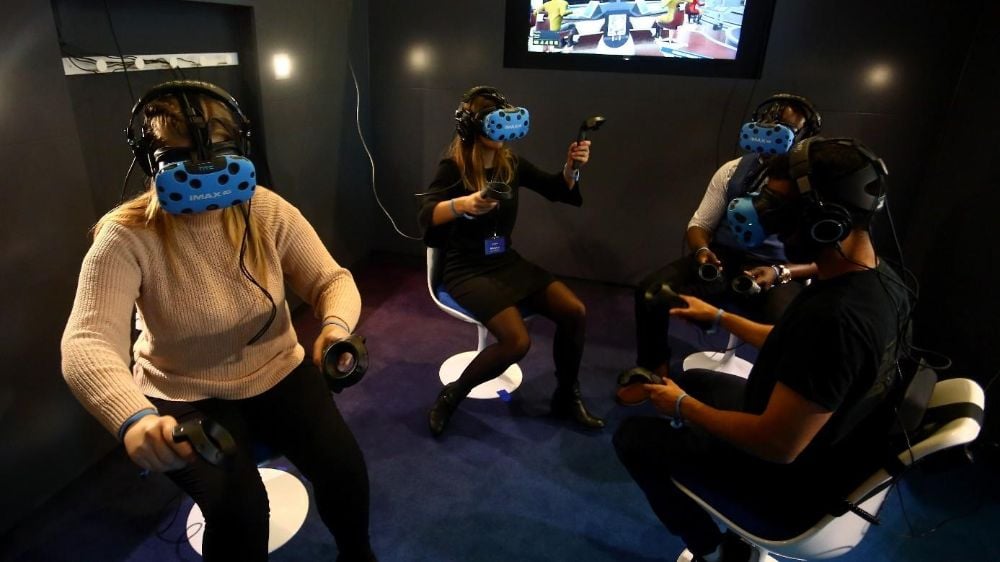
AR is evolving beyond simple mobile games that overlay a character onto a phone screen. The next generation of AR gaming is deeply integrated with the user’s physical world.
A. Spatial Anchoring and Persistence
Advanced AR systems can now spatially anchor digital objects so they remain fixed in a specific spot in the real world, even if the user leaves and returns later. This persistence is vital for long-term, location-based games.
B. Environmental Understanding
AR software utilizes depth sensors (LIDAR) to understand the geometry of the user’s room, recognizing surfaces, walls, and obstacles. This allows digital characters to realistically hide behind real-world chairs or cast shadows on actual floors.
C. Multiplayer Local Co-Op
AR glasses or headsets enable multiple players in the same physical room to see the same digital game objects layered over their shared space. Imagine a strategy game played out on your actual kitchen table.
D. AR Location-Based Gaming
Gaming experiences are becoming truly tied to real locations. Games can require players to travel to specific physical landmarks, where an AR layer reveals hidden quests, puzzles, or digital portals accessible only in that precise spot.
E. Narrative Overlay
AR will seamlessly integrate gaming into daily life, allowing for subtle, background narratives where an NPC might appear on a city corner or a quest item might be virtually placed in a local coffee shop.
The Power of Haptics and Sensory Feedback
True immersion requires engaging more than just sight and sound. Haptics (the technology of touch) and other sensory feedback systems are crucial components of the breakthrough.
A. Advanced Controller Haptics
Modern controllers are capable of delivering extremely detailed and varied sensory feedback, simulating the tension of drawing a bow, the impact of rain, or the recoil of a specific weapon with high fidelity.
B. Full-Body Tracking and Suits
Developments in haptic suits and vests offer the user localized physical feedback, allowing them to feel the impact of a bullet or the sensation of rain on their torso, truly connecting the digital action to the physical body.
C. VR Treadmills and Locomotion
To overcome the challenge of moving large distances in small rooms, advanced omnidirectional treadmills allow users to naturally walk, run, and strafe in any direction while remaining physically contained, eliminating unnatural teleportation methods.
D. Scent and Temperature Simulation
Peripheral technologies are emerging to complete the sensory immersion, using subtle chemical releases to simulate the smell of gunpowder, forest air, or ocean spray, while small heating/cooling elements can adjust the perceived environmental temperature.
E. Biometric Feedback Integration
New systems monitor the player’s real-time physical state (heart rate, galvanic skin response) to dynamically adjust the game. If the player is too stressed, the AI might subtly ease the game pace to maintain the desired emotional experience.
Redefining Game Genres and Experiences
VR and AR are not just porting old genres; they are creating entirely new categories of experiences that exploit the technologies’ unique strengths.
A. Immersive Horror and Thriller
The sense of presence and lack of peripheral vision make horror games uniquely terrifying in VR, transforming jump-scares into physically jarring events and making the player feel truly vulnerable.
B. Fitness and Movement Games
AR and VR are driving the boom in gamified wellness. Games like rhythm boxing and virtual explorations track real calories burned and physical movement, integrating exercise directly into engaging gameplay loops.
C. Training and Simulation
Beyond entertainment, the high fidelity of VR is revolutionizing professional simulation, allowing gamers to effectively pilot virtual aircraft, practice surgery, or repair complex machinery in a risk-free environment.
D. Creative Tools and World Building
VR enables users to sculpt, paint, and build 3D environments with intuitive hand movements. Gamers become in-world architects, allowing for collaborative, shared creation within the virtual space.
E. Social and Collaborative Spaces
VR and AR remove geographical limitations for social interaction. Meeting friends or collaborators in a digital space becomes a fully embodied experience, leading to new forms of virtual community and social gaming.
Conclusion
The technological refinement of both Virtual Reality and Augmented Reality marks a pivotal, game-changing moment for the entertainment industry.
This powerful convergence of high-resolution displays, highly accurate tracking, and realistic haptic feedback has successfully shattered the final barriers between the player and the digital experience.
The once-abstract notion of “presence” is now a measurable, psychological reality, making virtual worlds feel genuinely tangible and immediate.
AR, conversely, has integrated digital interaction into the fabric of daily life, transforming physical spaces into persistent, personalized game boards.
As hardware becomes lighter, cheaper, and more self-contained, these immersive technologies are finally transitioning from niche enthusiast platforms to mainstream consumer devices.
This immersive leap is not a simple graphical upgrade; it is a fundamental shift in how humans interact with digital information and narratives.
Ultimately, VR and AR are opening up an endless new frontier for game design, creating unprecedented emotional depth and physical engagement that guarantees the future of gaming is played not on a screen, but deeply within the world.