The New Frontier: Gaming Without Hardware Limits
The dream of instantly accessing the most graphically demanding and technically ambitious video games has long been tethered to the harsh realities of expensive, rapidly obsolescent hardware.
For decades, enjoying a true AAA gaming experience necessitated a substantial financial commitment, forcing enthusiasts to navigate the continuous, costly cycle of upgrading their PC components or purchasing the latest, most powerful gaming consoles.
This perpetual arms race between developers pushing graphical boundaries and consumers struggling to keep pace has created a significant barrier to entry, effectively segmenting the global audience into those who can afford cutting-edge performance and those relegated to older, less immersive experiences.
However, a seismic shift is underway, fundamentally challenging this traditional model and democratizing high-fidelity gaming access for a significantly broader, global population.
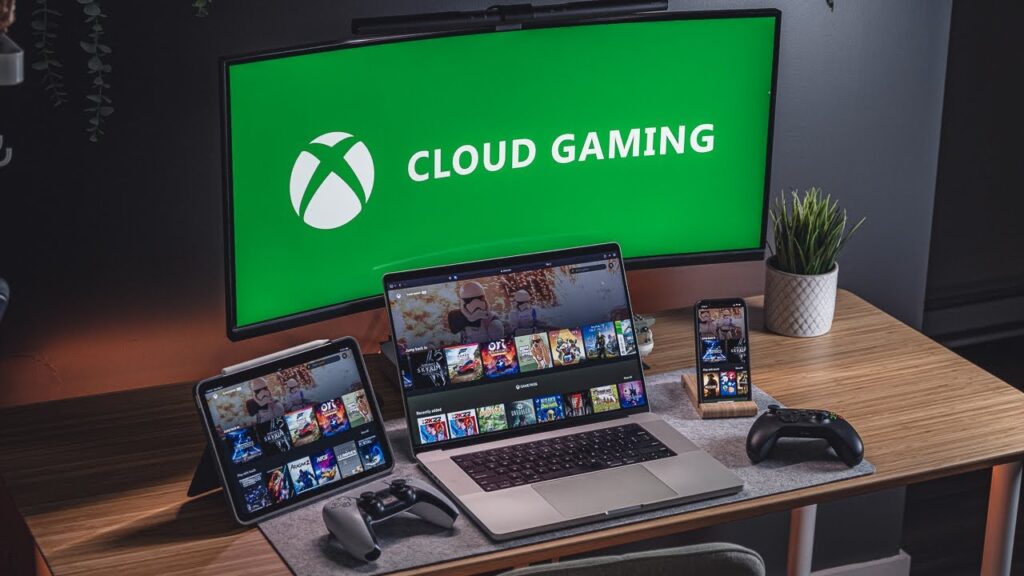
This revolution is powered by cloud gaming, a technology that deftly abstracts the necessity of local processing power by streaming games directly to nearly any device, from basic smartphones and smart TVs to older laptops and desktop computers.
This innovative approach leverages vast, powerful remote server farms to handle all the intensive rendering, computation, and graphical heavy lifting, instantly transmitting the resulting video feed back to the user with minimal perceptible latency.
It is a revolutionary concept that promises to decouple the quality of the gaming experience from the power of the end-user device, thus tearing down the economic and technical barriers that have long defined the industry.
Consequently, this emerging paradigm heralds a future where geographical location or economic standing will no longer dictate whether a player can participate in the leading edge of interactive entertainment.
Deconstructing the Cloud Gaming Mechanism

Understanding the mechanics behind cloud gaming, often referred to as Gaming-as-a-Service (GaaS), reveals why it’s a revolutionary solution to hardware dependency. The process is a seamless, technologically intensive loop designed to deliver high performance without local strain.
A. Remote Processing Power
The core concept is that the actual game execution—the rendering of 3D models, complex physics calculations, and AI decision-making—occurs on massive, high-performance servers, typically utilizing state-of-the-art NVIDIA or AMD GPUs and powerful CPU clusters. These remote data centers handle the heavy lifting that would traditionally tax a local console or PC.
B. Video Encoding and Compression
Once the server generates the game frame, it instantly encodes this data into a highly compressed video stream, often using codecs like H.265 or specialized AV1, optimized for low latency transmission. This process must be incredibly fast to maintain responsiveness.
C. Transmission via Internet Backbone
The compressed video stream is then transmitted across the user’s Internet Service Provider (ISP) network and the Internet backbone to the user’s location. The efficiency of the network infrastructure, especially the adoption of 5G and fiber optic connections, is crucial here.
D. Client Decoding and Display
The user’s device, regardless of its processing power (be it a smartphone or a weak PC), only needs a minimal amount of power to decode this incoming video stream and display it on the screen. The client device isn’t running the game; it’s simply playing a video of the game, live.
E. Input and Command Loop
Simultaneously, when the user presses a button on their controller or keyboard, that command is instantly encoded and sent back to the remote server. The server registers the command, processes the resulting action in the game world, and sends a new, updated video frame back to the user, completing the interactive loop.
The Hardware Democratization Effect
The primary benefit of cloud gaming is its radical ability to decouple the quality of the game from the quality of the local machine. This opens up AAA gaming to a massive, untapped audience.
A. Extending the Lifespan of Existing Devices
Cloud services breathe new life into older laptops, budget computers, and previous-generation consoles. Users no longer need to worry about minimum system requirements, as long as their device can run the streaming client and maintain a stable internet connection.
B. Enabling Mobile and Casual Gaming
Platforms can now deliver titles like Cyberpunk 2077 or Forza Horizon to standard Android or iOS smartphones and tablets. This expands the definition of mobile gaming from small, touch-based experiences to full console-quality titles on the go.
C. Reducing E-Waste and Consumer Cost
By removing the necessity of constant hardware upgrades, cloud gaming has a significant environmental benefit, reducing the cycle of electronic waste. More importantly, it removes the steep, upfront cost barrier for consumers, replacing it with an affordable monthly subscription fee.
D. Simplifying the User Experience
The platform handles all the technical headaches: installation, patching, driver updates, and storage management are all centralized on the remote server. The user benefits from an “instant-play” experience, clicking a title and immediately jumping into the action.
E. Global Access to Regional Exclusives
In regions where importing high-end components is difficult or prohibitively expensive, cloud gaming offers a lifeline. All that is required is accessible internet infrastructure to unlock the entire global library of high-end titles.
Latency and Network Infrastructure: The Core Hurdle
While the promise is transformative, the Achilles’ heel of cloud gaming remains latency. The entire system relies on the speed of light and the quality of global network infrastructure.
A. The Physics of Latency
The input signal must travel from the user to the server, and the video output must travel back—this round-trip time must be extremely low, preferably under 50-60 milliseconds (ms), for fast-paced action games to feel responsive.
B. Edge Computing Solutions
To combat distance-induced latency, cloud providers are strategically deploying Edge Computing—mini data centers placed geographically closer to dense population areas. By moving the processing power closer to the edge of the network, they minimize the physical distance data must travel.
C. The Role of 5G and Fiber
The global rollout of 5G cellular networks and increasingly widespread fiber-to-the-home (FTTH) internet connections are critical accelerators. These technologies reduce the “last-mile” bottleneck, ensuring the data highway to the user’s home is as wide and fast as possible.
D. Adaptive Streaming Technology
Advanced algorithms constantly monitor the user’s connection speed and dynamically adjust the video quality, resolution, and frame rate in real-time. This helps prevent complete stream failure, prioritizing lower latency over absolute visual fidelity when the connection degrades.
E. Input Prediction and Buffering
Some services utilize subtle input prediction techniques, which attempt to guess the player’s next move (like moving forward) and begin processing it before the command is even received, making the game feel slightly more responsive, though this carries a slight risk of error.
Business Models and Market Competition
The rise of cloud gaming has created a fiercely competitive environment, with major tech and gaming giants vying for market dominance through varied service models.
A. All-Inclusive Subscription Models
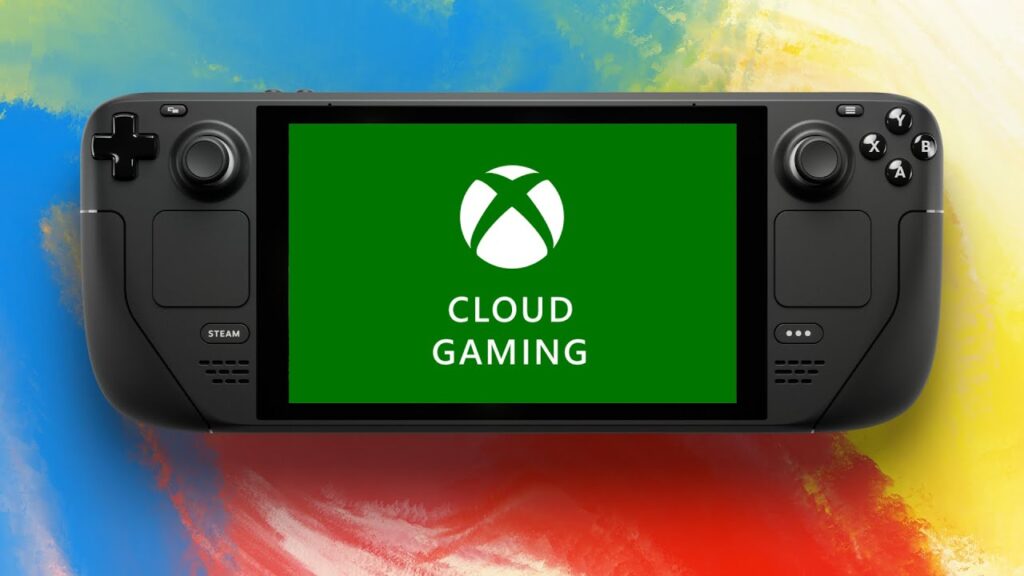
Services like Microsoft’s Xbox Cloud Gaming (via Game Pass Ultimate) offer a vast, rotating library of hundreds of titles for a single monthly fee. This “Netflix for Games” model prioritizes library access and value.
B. Bring-Your-Own-License (BYOL) Model
Platforms like NVIDIA GeForce NOW focus on providing access to the cloud hardware to play games the user already owns on platforms like Steam or the Epic Games Store. This model respects the user’s existing game ownership.
C. Virtual Machine Rental
Less common for consumer gaming but present, this model involves renting a powerful, dedicated virtual PC environment by the hour. The user installs and manages the entire operating system and game library themselves, offering maximum customization.
D. The Console/Cloud Hybrid Strategy
Major console makers are adopting a hybrid approach. The local console remains the primary device, but cloud streaming is used to offer backward compatibility, try new games instantly, or stream to mobile devices when away from the main hardware.
E. The Tech Giant Convergence
The cloud gaming space has become a key battleground for major technology companies—Amazon (Luna), Google (Stadia, though now shuttered, its tech lives on), Microsoft, and NVIDIA—all leveraging their vast cloud infrastructure to capture a share of the gaming market.
The Next Generation of Cloud Innovations
The current state of cloud gaming is merely the beginning, with several key innovations poised to make the experience indistinguishable from local play.
A. Server-Side Ray Tracing
Since the server handles the rendering, developers can implement the most demanding visual features, such as full path tracing and high-fidelity Ray Tracing, without requiring the player to own an expensive, Ray Tracing capable GPU.
B. Cloud-Native Game Design
Future games will be designed specifically to leverage the cloud’s distributed architecture. This could enable massive multi-user simulations or physics that are too demanding for a single console to handle.
C. AI-Driven Scaling and Optimization
Advanced AI models will manage server loads and resource allocation in real-time, ensuring that a surge in players at peak hours doesn’t result in performance degradation for any individual user.
D. Integration with Smart Devices
Cloud gaming will become a built-in feature of modern smart TVs, eliminating the need for any external device (console or box), further simplifying the ecosystem and promoting the “access anywhere” philosophy.
E. Zero-Installation Demos and Trials
Publishers will leverage cloud infrastructure to offer full, instant-play demos of new games directly within a browser or on a storefront, allowing users to try before they buy without a lengthy download.
Conclusion
Cloud gaming represents a fundamental and permanent re-engineering of the video game distribution model. This innovation effectively decouples the necessity of expensive, rapidly aging local hardware from the high-fidelity entertainment experience.
By shifting the intensive computational load to remote, powerful data centers, cloud services have already unlocked access to AAA titles for billions of individuals worldwide, regardless of their local device capabilities. The service replaces the costly, cyclical purchase of consoles and graphics cards with an accessible, affordable monthly subscription fee.
Though challenges like overcoming network latency remain central to the technology’s widespread adoption, ongoing advancements in edge computing, 5G deployment, and predictive algorithms are rapidly closing this performance gap.
The true power of this shift is the democratization of high-end gaming, transforming the global audience from a niche of wealthy enthusiasts into a universal community of connected players.
This model is not simply a new way to play games; it is the inevitable future standard for game distribution, guaranteeing that the best, most immersive experiences are available instantly on the device currently in the player’s hand.